What our own call data taught us about measuring calls
We exported every call this desk has placed since May and went through them properly, outbound and inbound.
Two of the numbers we had been quoting turned out to be wrong, and both were wrong in the flattering direction. That is worth writing down, because it is the normal case and almost nobody publishes it.
What we were telling ourselves
A 95% connect rate. This was measured as "any call with a duration above zero". On a dialer export the duration clock starts when dialing starts, not when somebody answers, so a four second ring out counted as a connection.
Nobody connects on 95% of cold calls. We knew that, and yet the number sat on a dashboard for weeks because it was never obviously absurd enough to check.
At a twenty second floor the real figure is 50%. That is a good number. It is also a number you can do something with, which the first one never was.
Time to first touch of zero minutes. This one was worse, because it was not a threshold problem, it was a data problem. Lead records had been imported without their original creation dates, so every lead appeared to have been created the moment it landed in the system, and every call therefore looked instantaneous.
Corrected, the gap from a lead arriving to anybody speaking to it was measured in weeks, not minutes. Leads were arriving and nothing was surfacing them.
The honest numbers
- About half of all calls connected at twenty seconds or longer, a 50% connect rate
- About 24 conversations of sixty seconds or longer per hundred dials
- Time to first touch: weeks, until the queue was fixed
What we changed because of it
Twenty seconds is now the connect threshold everywhere. Not because it is a standard, but because on this data it is the point where ring outs stop and humans start.
Sixty seconds is a conversation. It clears a voicemail greeting and a fast no, and what is left is two people talking.
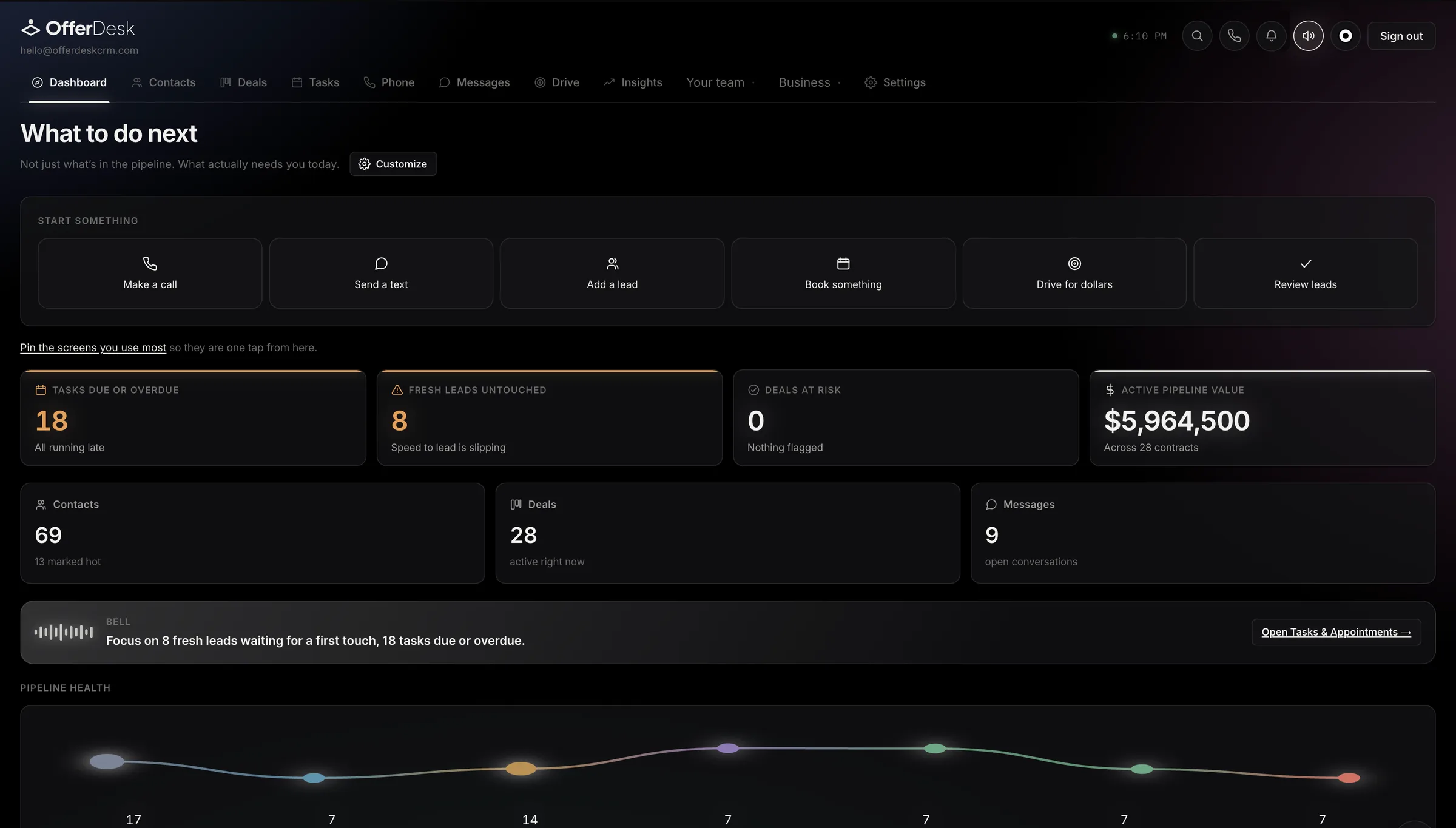
The dashboard opens on what is stale, not on the pipeline. A slow first touch is not a coaching problem. It is a queue nobody could see. A pipeline view would have shown the same leads every morning and never once said which of them had been sitting untouched since June.
The uncomfortable part
Every one of these errors made us look better than we were, and none of them were deliberate. That is how measurement fails in practice. Nobody sets out to inflate a number; a default gets chosen early, the number it produces is plausible, and it never gets challenged because it never causes pain.
The test we use now: if a metric has never once told us something we did not want to hear, it is probably not measuring anything.