Ask why before you name a price: seller motivation questions that change the offer
Most seller calls get to price too early. The seller asks what you would pay, you answer, and now the whole call is about a number before you know why they want to sell.
That order costs money. When you do not know why someone wants out, the only thing left to talk about is the number, so every objection turns into a price objection, and you end up moving the price without being asked to.
Motivation first is not a script trick. It is how you find out what the offer actually has to solve.
Why price-first calls go sideways
A seller who hears a number before they have told you anything has only one way to respond: higher or lower. You have given them nothing else to weigh it against.
A seller who has just spent three minutes telling you the house has been empty since their mother passed, the taxes are due in March and their siblings want it settled, hears the same number differently. Now it is attached to a problem going away.
The number did not change. The conversation around it did.
The questions, in order
Ask these before any figure comes up, including theirs. If they ask "what would you pay?" early, it is fine to say you want to understand the house and their timing first so the number means something.
- "What has you thinking about selling?" Open, and then stop talking. The first answer is usually the polite one. The second is usually the real one.
- "How long has that been going on?" A problem that started last week and one that started two years ago are different conversations.
- "What happens if it does not sell?" This is the question most calls skip. The answer tells you how much the outcome matters to them, which is the thing that decides whether your offer is interesting.
- "When would you want this done by?" Get a date or an event, not "soon". A closing tied to a move, a tax bill or a court date is a real deadline.
- "Who else is part of the decision?" A spouse, a sibling, an heir, an attorney. Find out now, not after you send paperwork.
- "What would make this a good outcome for you?" Sometimes it is a number. Often it is speed, certainty, not having to clean the house out, or not dealing with tenants.
Only after those do the condition questions and the price conversation start.
Write it down in their words
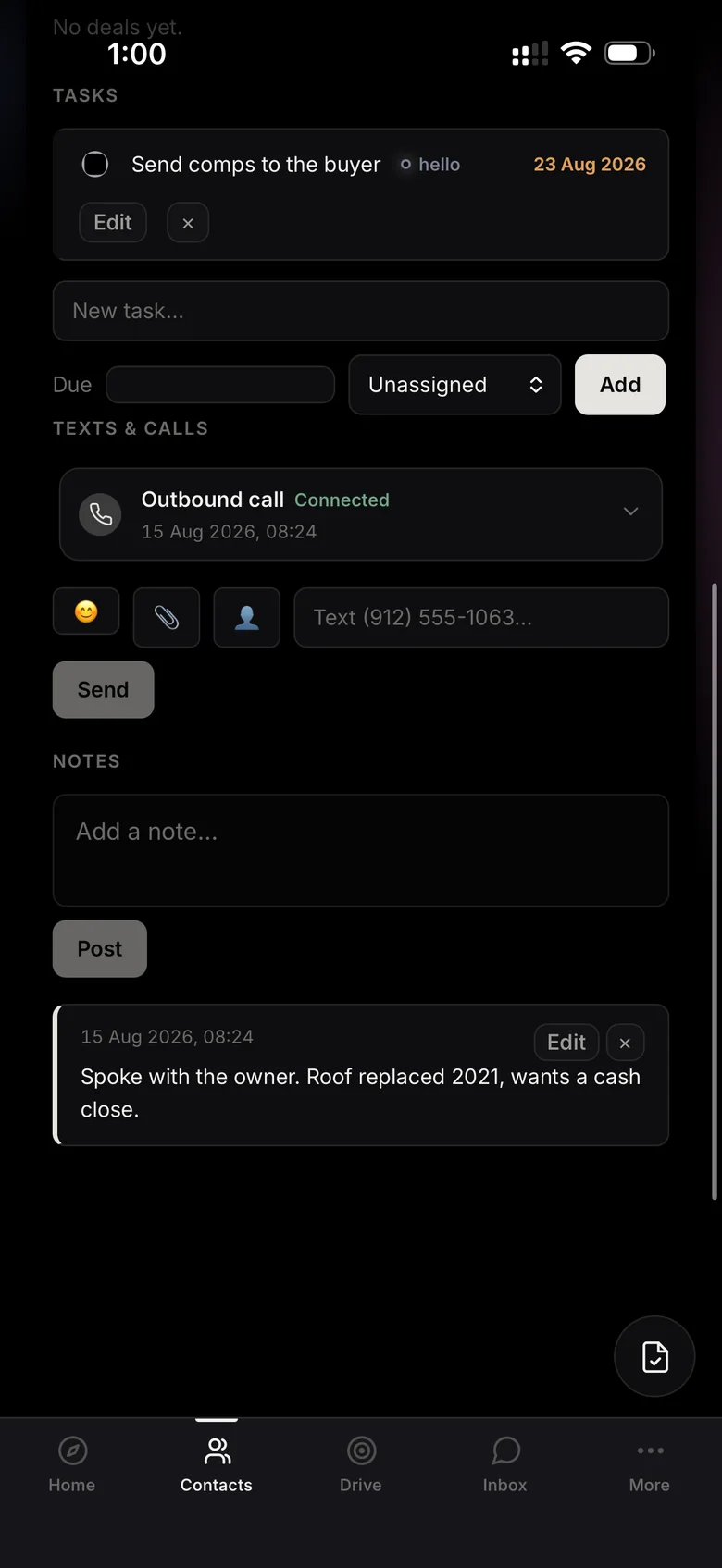
The answers are worth nothing if they live in your memory. Write down what the seller said, as close to their words as you can, next to the lead:
- the reason, in one line
- the deadline, as a date
- who decides
- what a good outcome looks like to them
That record does two jobs. When you build the offer, you know what it has to solve, not just what the comps say. And when you call back in a week, you open with their situation instead of "just following up", which is the fastest way to sound like every other caller on their phone.
Then lock the next step
A call that goes well and ends with "I will get back to you" is a call you will have to win again.
Before you hang up, agree on what happens next and when: "I will run the numbers tonight and call you Thursday at four. Does that work?" Then read it back. If they cannot commit to a time, that tells you something too.
What this looks like on a call
A short version of a good opening, once the seller has confirmed the address:
"Before I talk about any numbers, can I ask what has you thinking about selling?"
"My dad passed in the spring and nobody has been in the house since."
"I am sorry. How has it been, handling that?"
"Honestly, it is a lot. My brother wants it gone before the taxes come due."
"When are those due?"
Three questions in, you know the reason, the deadline and that a second person decides. None of it needed a number.
Practice it
Pick five calls from this week and write down, for each one, how far in the price came up and whether you knew the seller's reason by then. Most people are surprised by the answer. Then try one week of motivation first on every call, and compare.
If you want the openers, motivation questions and objection responses on one screen while the seller is still talking, the free cold calling script covers the opening, and the objection library covers what comes back. OfferDesk keeps the reason, deadline and next step on the lead itself, so the next call starts where this one ended. Get your free desk.